
 English
 русский
 Español
Home / News / Industry News / Cross-Linked Shrink Film Explained: What It Is, How It Works, and When to Use It
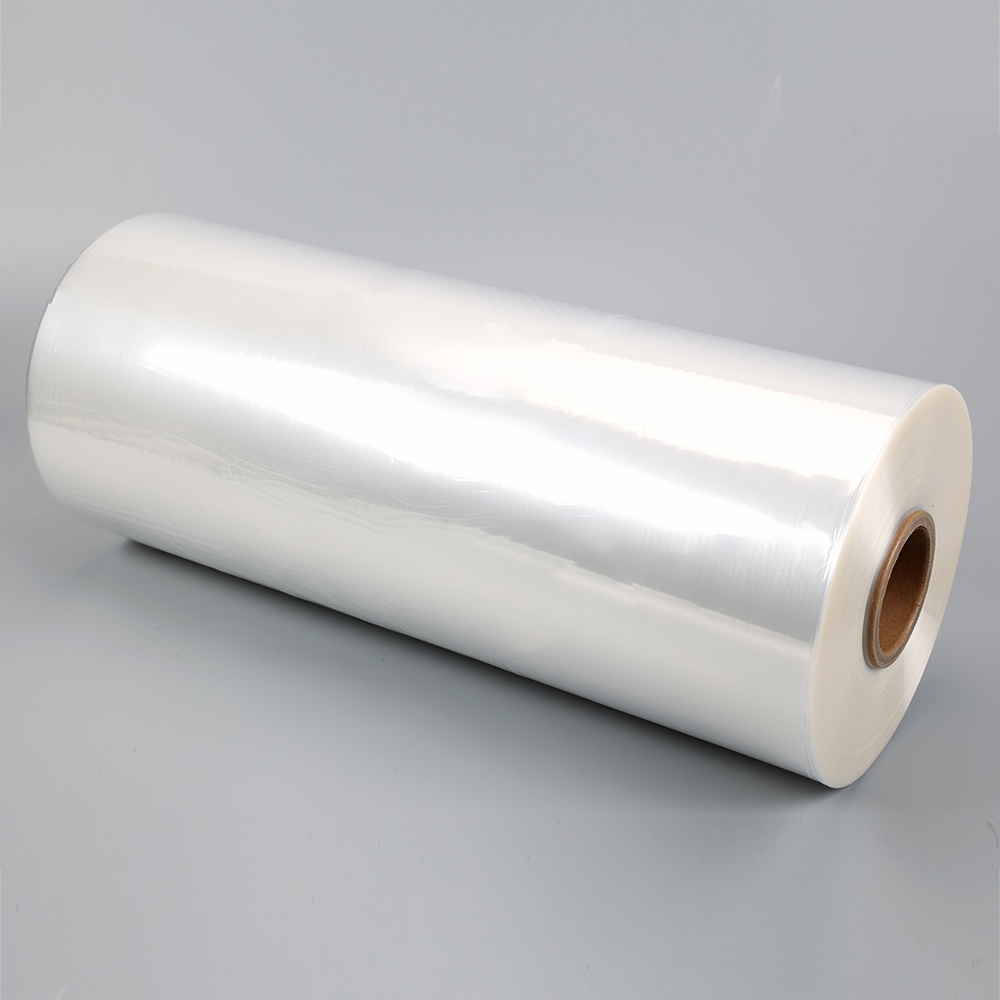
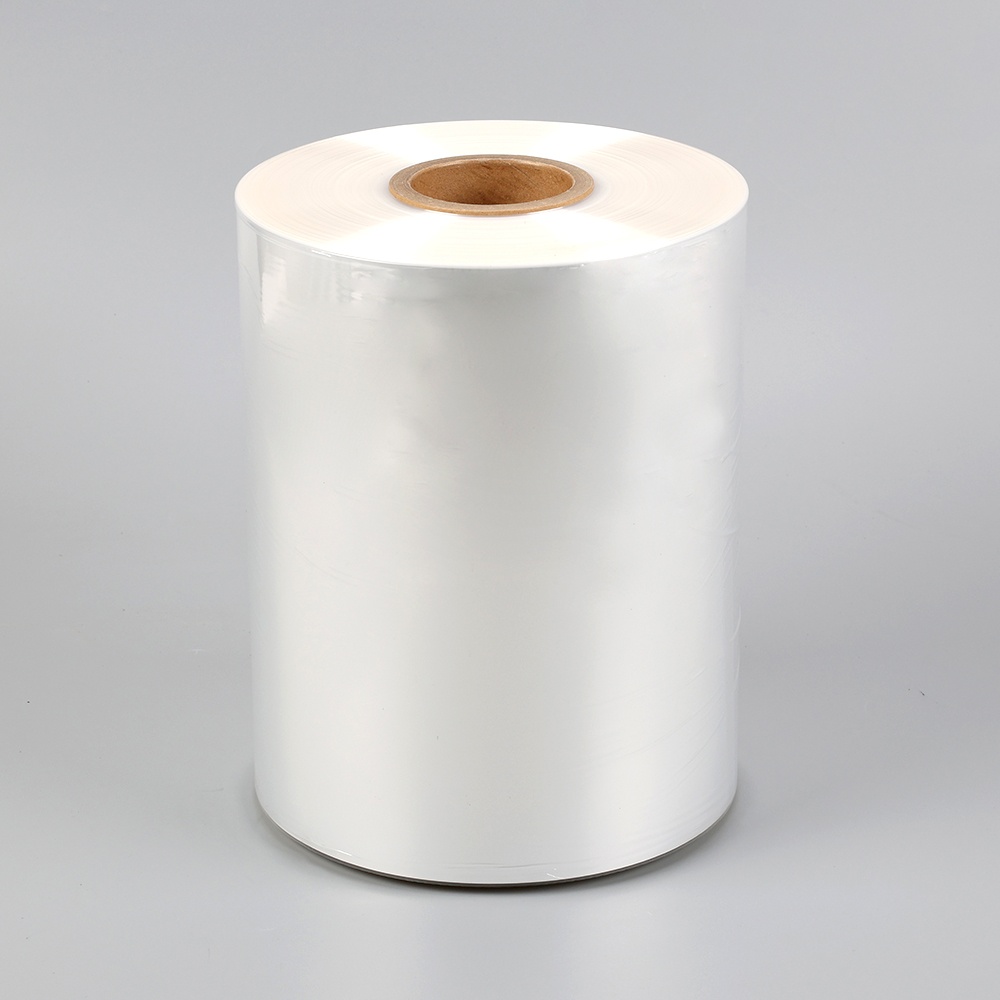
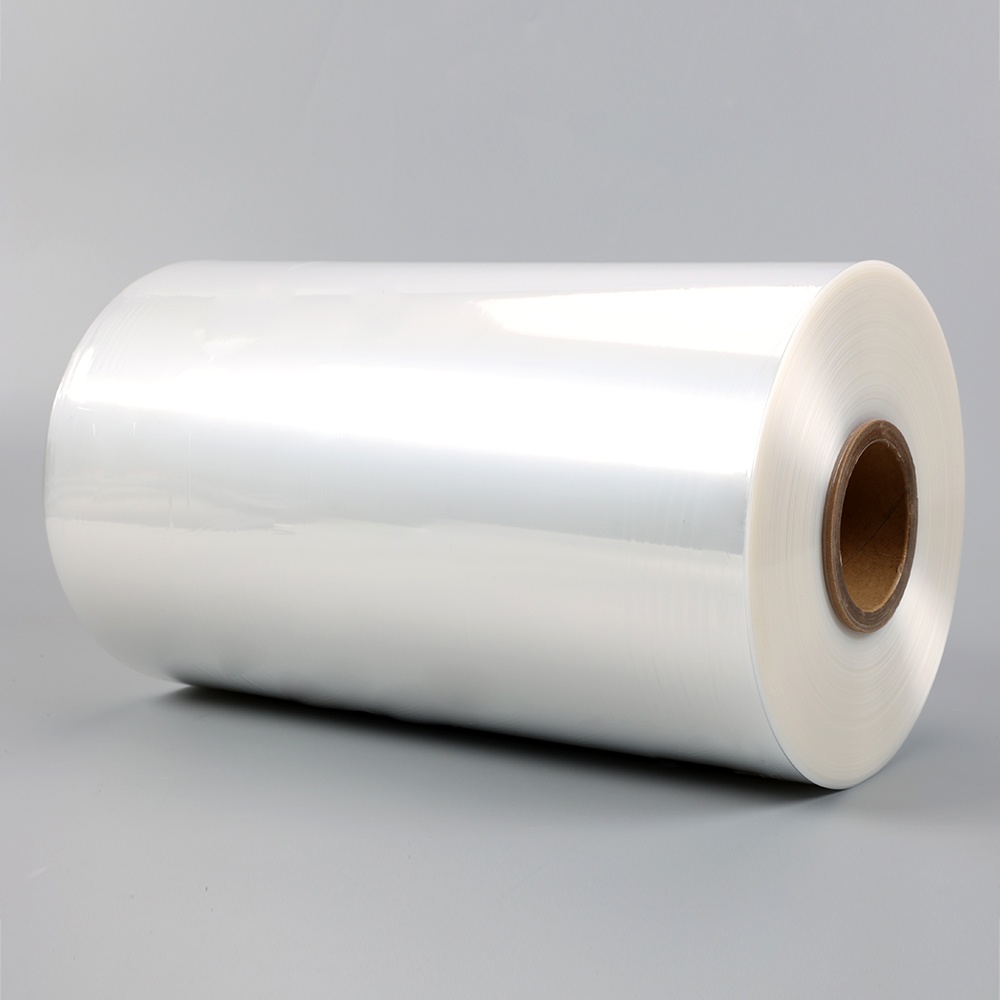
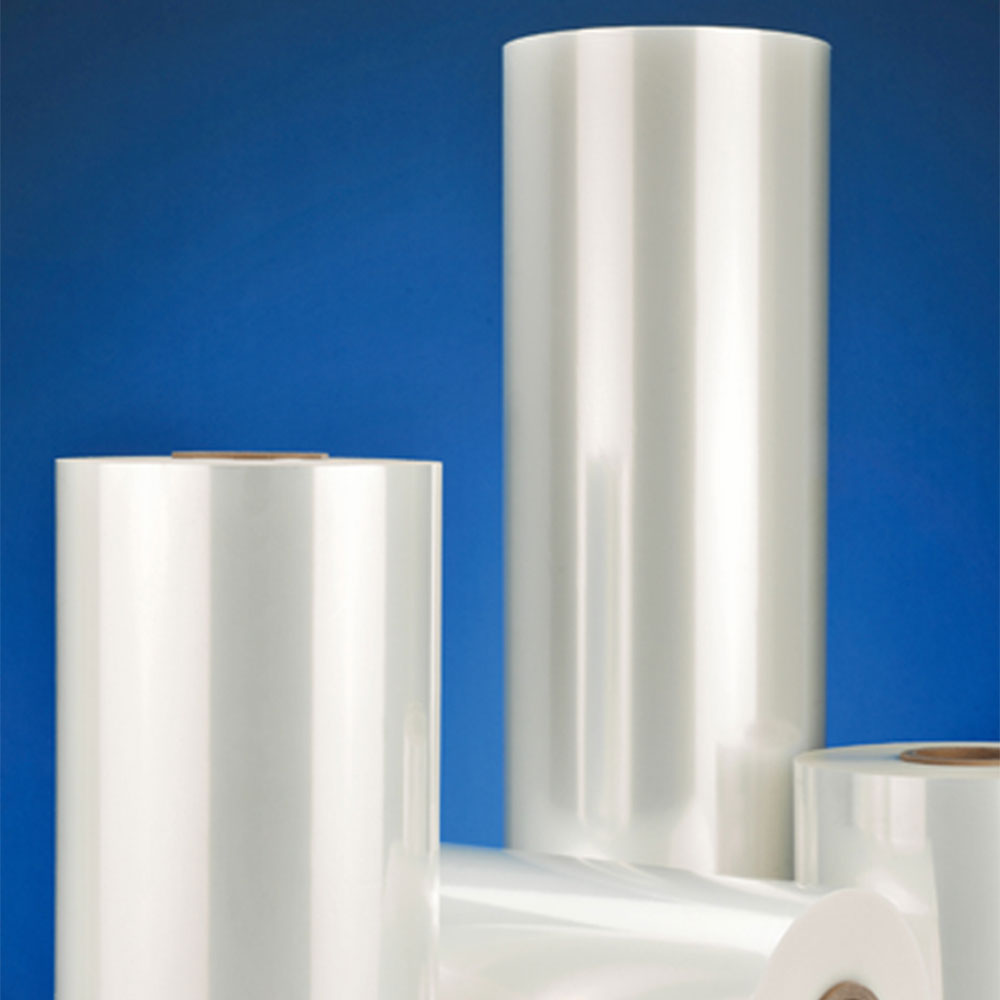
If you've ever watched a shrink-wrapped product come out of a heat tunnel looking perfectly tight, glossy, and wrinkle-free, there's a good chance cross-linked shrink film was doing the work. Cross-linked shrink film is a polyolefin-based packaging film that has been treated — either by electron beam irradiation or chemical processes — to create molecular bonds between adjacent polymer chains. These cross-links fundamentally change how the film responds to heat, giving it a memory that standard non-cross-linked films simply don't have.
In a conventional polyolefin or PVC shrink film, the polymer chains are largely independent. When heat is applied, they contract in a relatively unpredictable way, and the film can tear, pinhole, or shrink unevenly if the temperature isn't dialed in precisely. Cross-linked polyolefin shrink film behaves differently because those inter-chain bonds force the entire film structure to respond as a network rather than as individual chains. The result is a material that shrinks more uniformly, tolerates a wider processing temperature window, and achieves significantly higher tensile strength and puncture resistance than its non-cross-linked counterparts.
It's worth distinguishing cross-linked shrink film from standard polyolefin shrink film, which is sometimes marketed loosely under similar terminology. True cross-linked film — particularly irradiation cross-linked shrink film — undergoes a measurable change in molecular architecture. The degree of cross-linking, expressed as gel content percentage, directly determines the film's shrink force, elongation at break, and heat resistance. Higher gel content generally means stronger, more dimensionally stable packaging, but also demands more precise heat tunnel settings to activate the shrink response fully.
There are two primary routes to producing cross-linked shrink film, and they produce materials with meaningfully different performance profiles. Understanding which method was used to manufacture a film helps predict how it will behave on your packaging line and in downstream distribution.
The dominant method for producing high-performance cross-linked shrink film at commercial scale is electron beam (e-beam) irradiation. In this process, extruded polyolefin film passes through an electron accelerator, where high-energy electrons penetrate the film and knock hydrogen atoms off the polymer backbone. The resulting free radicals on adjacent chains bond together, forming the cross-linked network. The process happens in seconds, requires no chemical additives, and leaves no residue — making irradiation cross-linked polyolefin shrink film inherently food-safe and compatible with pharmaceutical and medical device packaging regulations.
E-beam cross-linking allows manufacturers to tune the degree of cross-linking precisely by adjusting the irradiation dose, measured in kilograys (kGy). A typical commercial cross-linked shrink film receives between 80 and 200 kGy depending on the target application. Higher doses increase cross-link density, boosting hot tear resistance and shrink force but narrowing the processing window slightly. Most irradiation cross-linked shrink films used in food packaging operate in the 100–150 kGy range, which balances strong seal integrity with manageable heat tunnel requirements.
Chemical cross-linking uses peroxide-based or silane-based systems blended into the resin before or during extrusion. When the film is subsequently heated — either during a post-extrusion curing step or during the shrink application itself — the chemical agents activate and form cross-links between polymer chains. Chemical cross-linking is less capital-intensive than e-beam and can be implemented on standard extrusion lines with formulation modifications, but it introduces considerations around residual chemical content that make it less suitable for direct food contact without careful validation. It is more commonly encountered in industrial shrink applications, heavy-duty pallet wrapping, and construction product bundling where food contact regulations don't apply.
The practical advantages of cross-linked shrink film over standard polyolefin or PVC alternatives become clear when you look at the specific performance metrics that matter in packaging operations. The differences aren't marginal — in several categories, cross-linked film outperforms non-cross-linked alternatives by a significant margin.
| Property | Cross-Linked Shrink Film | Standard POF Shrink Film | PVC Shrink Film |
| Shrink Uniformity | Excellent | Good | Moderate |
| Puncture Resistance | Very High | Moderate | Low–Moderate |
| Seal Strength | High | Moderate | Moderate |
| Processing Temperature Window | Wide | Moderate | Narrow |
| Optical Clarity | Excellent | Good | Good |
| Food Contact Safety | Yes (e-beam) | Yes | Restricted |
| Gauge Range (typical) | 9–25 microns | 12–30 microns | 15–40 microns |
One property that doesn't appear in the table but deserves specific attention is hot tear resistance — the film's ability to resist tearing while still hot immediately after exiting the heat tunnel. Non-cross-linked films are at their weakest at elevated temperatures because the polymer chains are in a mobile, disordered state. Cross-linked shrink film retains structural integrity even when hot because the cross-link network continues to hold the film together. This is critical on high-speed packaging lines where products move rapidly from the tunnel exit to downstream conveyors and stacking stations, and any film tear at that stage creates costly downtime and product loss.
Cross-linked polyolefin shrink film is specified across a wide range of industries, but it's not universally necessary for every shrink packaging application. Understanding where its specific advantages justify the cost premium over standard film helps procurement and packaging engineers make the right material selection.
This is the largest single application category for cross-linked shrink film. Fresh meat, poultry, cheese, and seafood packaging rely heavily on cross-linked multilayer barrier shrink film — a construction that combines the cross-linked polyolefin outer layer with EVOH or PVDC oxygen barrier layers to extend refrigerated shelf life. The cross-linked outer layer provides the mechanical strength and shrink performance, while the barrier layers do the preservation work. Retail-ready fresh meat packaging, vacuum skin packaging, and modified atmosphere packaging (MAP) all commonly specify cross-linked shrink film construction because the combination of tight conformation to irregular product shapes, high puncture resistance against bone protrusions, and excellent optical clarity for consumer product visibility is unmatched by non-cross-linked alternatives.
Beverage multipack bundling — grouping bottles, cans, or cartons into four-packs, six-packs, or larger configurations — is another major application. Here, cross-linked shrink film's superior tensile strength means thinner gauges can be used without sacrificing load integrity, which directly reduces material cost per pack and lowers film waste per production run.
Irradiation cross-linked shrink film is widely used in medical device packaging because the e-beam process that creates the cross-links simultaneously sterilises the film — eliminating the need for a separate sterilisation step for the packaging material itself. Surgical instrument trays, diagnostic kit overwraps, and pharmaceutical bottle bundling all benefit from the film's combination of sterility assurance, chemical inertness, and tamper-evidence. The tight, wrinkle-free shrink finish also supports the clean, clinical appearance that medical and pharmaceutical brand standards require.
For products with sharp edges, heavy weights, or irregular geometries — automotive components, hardware, construction materials, and ceramic tiles — cross-linked shrink film's puncture resistance and high tensile strength make it the appropriate specification. Standard shrink film would tear or pinhole under the stress of sharp corners or abrasive surfaces during transit. Cross-linked film, particularly at gauges of 19 microns and above, absorbs those mechanical stresses without losing wrap integrity, keeping multi-unit bundles secure from the packaging line through to the end-user.
In retail shelf-ready packaging, software and media packaging, cosmetics, and gift sets, cross-linked shrink film is specified primarily for its optical clarity and print surface quality. The film's exceptional clarity — haze values below 2% are achievable with high-quality irradiation cross-linked film — means printed graphics on the underlying product or insert card remain sharp and vivid through the overwrap. For premium consumer goods where shelf presentation drives purchase decisions, this transparency advantage over standard films is commercially significant.
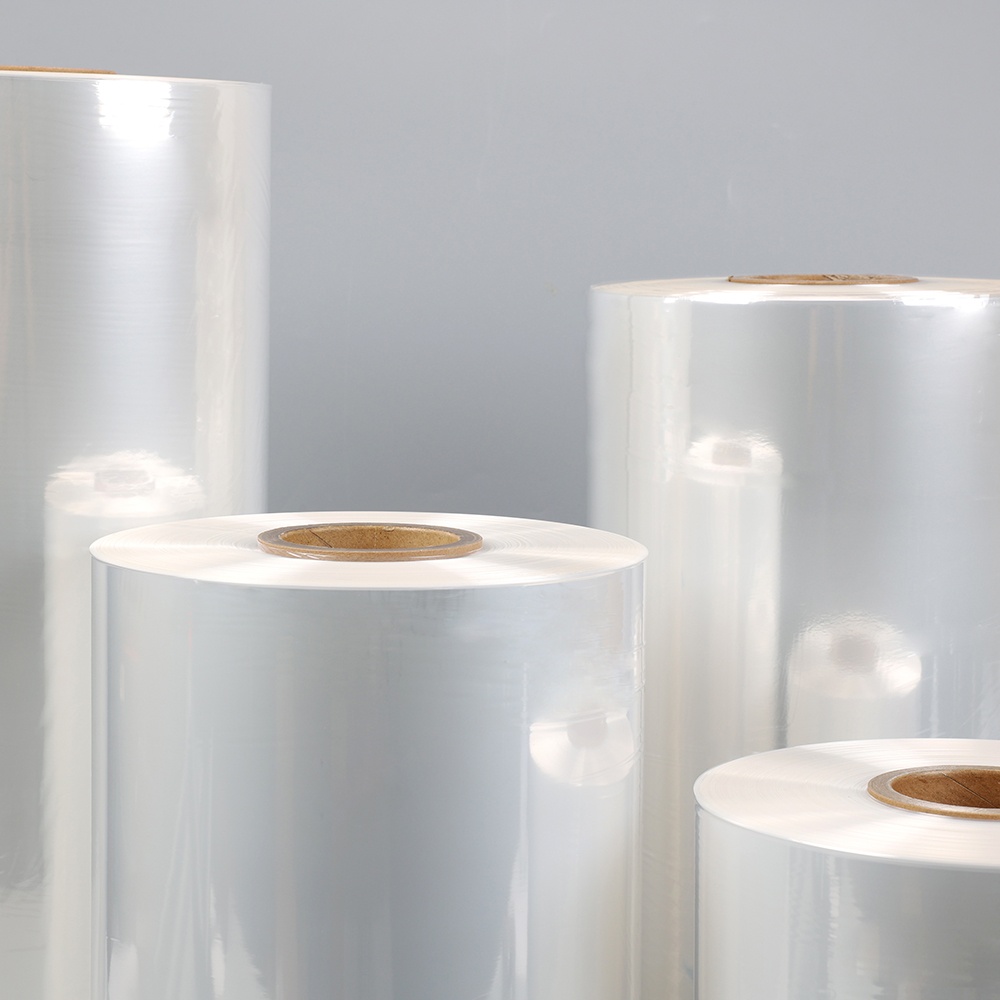
One of the most practically important decisions when specifying cross-linked shrink film is gauge — the film thickness, measured in microns (µm) or gauge units. Because cross-linked film delivers higher strength per unit thickness than non-cross-linked alternatives, it's often possible to downgauge — use a thinner film — while maintaining equivalent or superior pack performance. This is one of the key economic arguments for cross-linked film despite its higher per-kilogram cost.
It's important to validate gauge selection against actual line conditions rather than relying solely on published film specifications. Real-world factors — conveyor speeds, heat tunnel temperature uniformity, sealer jaw condition, and product geometry variation — all affect the minimum workable gauge for a given application. Most film suppliers offer trial quantities and technical support for gauge optimization trials, and running a structured trial before committing to a full production specification is standard practice for new applications.
Cross-linked shrink film's wider processing temperature window is a genuine operational advantage, but it doesn't mean tunnel settings can be ignored. Getting the heat tunnel dialed in correctly for the specific film and product combination determines whether you get tight, wrinkle-free packs or loose, dog-eared failures. The following guidance applies to irradiation cross-linked polyolefin shrink film on standard conveyor tunnel systems.
Most irradiation cross-linked shrink films activate shrink response in the 120–175°C range, compared to 160–200°C for standard POF and 140–160°C for PVC. This lower activation temperature reduces energy consumption and is gentler on heat-sensitive products — an important consideration for chocolate, candles, and certain pharmaceutical products. Start with the film supplier's recommended tunnel temperature and adjust in 5°C increments, observing the pack finish after each adjustment before committing to a final setting.
Dwell time — how long the wrapped product spends inside the tunnel — is as important as temperature. A product moving too quickly through the tunnel won't receive enough heat energy to fully activate shrink, resulting in loose wrap and unsealed edges. Moving too slowly risks over-shrinking, burn-through, or product heat damage. Cross-linked film generally tolerates a broader dwell time range than standard film before burn-through occurs, giving operators more line speed flexibility. As a starting point, target a dwell time of 3–6 seconds for most retail food applications and adjust based on observed pack quality.
Uniform airflow distribution inside the tunnel is critical for wrinkle-free results with cross-linked shrink film. Because cross-linked film has higher shrink force than standard film, any airflow imbalance — hot spots on one side, cold zones in the centre — will produce uneven shrink tension and visible wrinkles or dog ears that can't be corrected downstream. Check nozzle alignment and airflow balance regularly, especially after maintenance or tunnel cleaning. On products with significant height variation across a production run, adjustable nozzle height is worth the investment to maintain consistent air-to-film distance.
Sustainability is increasingly a specification requirement rather than a marketing consideration, and cross-linked shrink film sits in an interesting position within that conversation. On one hand, the downgauging potential of cross-linked film — using less material per pack because of higher strength per micron — directly reduces plastic consumption and packaging weight, which lowers transportation emissions and raw material cost simultaneously. This is a tangible, measurable sustainability benefit that life cycle assessments consistently validate.
On the other hand, the cross-linking process itself creates a complication for mechanical recycling. The cross-linked polymer network doesn't melt and reprocess cleanly in standard polyolefin recycling streams because the cross-links resist the thermal breakdown required for reprocessing. This means irradiation cross-linked shrink film is generally classified as non-recyclable in curbside collection programmes, even though it is technically a polyolefin material. For brands with commitments to recyclable packaging portfolios, this is a significant constraint that needs to be factored into material selection decisions.
Several development directions are being actively explored by film producers to address this limitation. Partially cross-linked formulations that maintain most of the performance benefits while preserving some recyclability are in commercial trials. Chemical recycling pathways — particularly pyrolysis — can handle cross-linked polyolefins without the limitations of mechanical recycling, and as chemical recycling infrastructure scales up, cross-linked shrink film may gain a credible end-of-life route that currently doesn't exist at commercial scale. For now, packaging engineers should weigh the material reduction benefits of cross-linked film against recyclability commitments on an application-by-application basis.
Not all cross-linked shrink films are equal, and supplier claims about cross-linking, performance specifications, and regulatory compliance should always be backed by documented test data. When evaluating a new cross-linked shrink film supplier or qualifying a new grade, the following questions and documentation requests are standard practice for packaging engineers and procurement teams.
It's also worth asking about lot-to-lot consistency and quality control procedures, particularly if you're running high-speed automated packaging lines where film property variation between rolls can cause sealer and tunnel setting drift that results in pack quality failures mid-run. Suppliers who can provide statistical process control data on key properties across production lots are preferable to those who can only provide nominal values from a single test sample.
Shading Cross-Linked Shrink Film: What It Does, Who Needs It, and How to Choose the Right Type
Printable Shrink Film: Complete Guide to Materials, Printing Methods, and Getting Professional Results
Mobile site

alibaba
Copyright © 2023 Zhejiang Zhongcheng Packing Material Co., Ltd. All Rights Reserved. Privacy Polyolefin Shrink Film Manufacturers